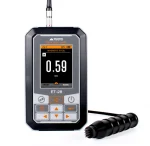
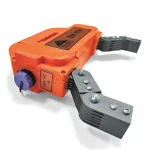
ET-28 – Crack depth meter
Crack depth meters
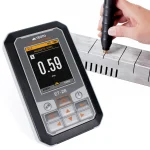
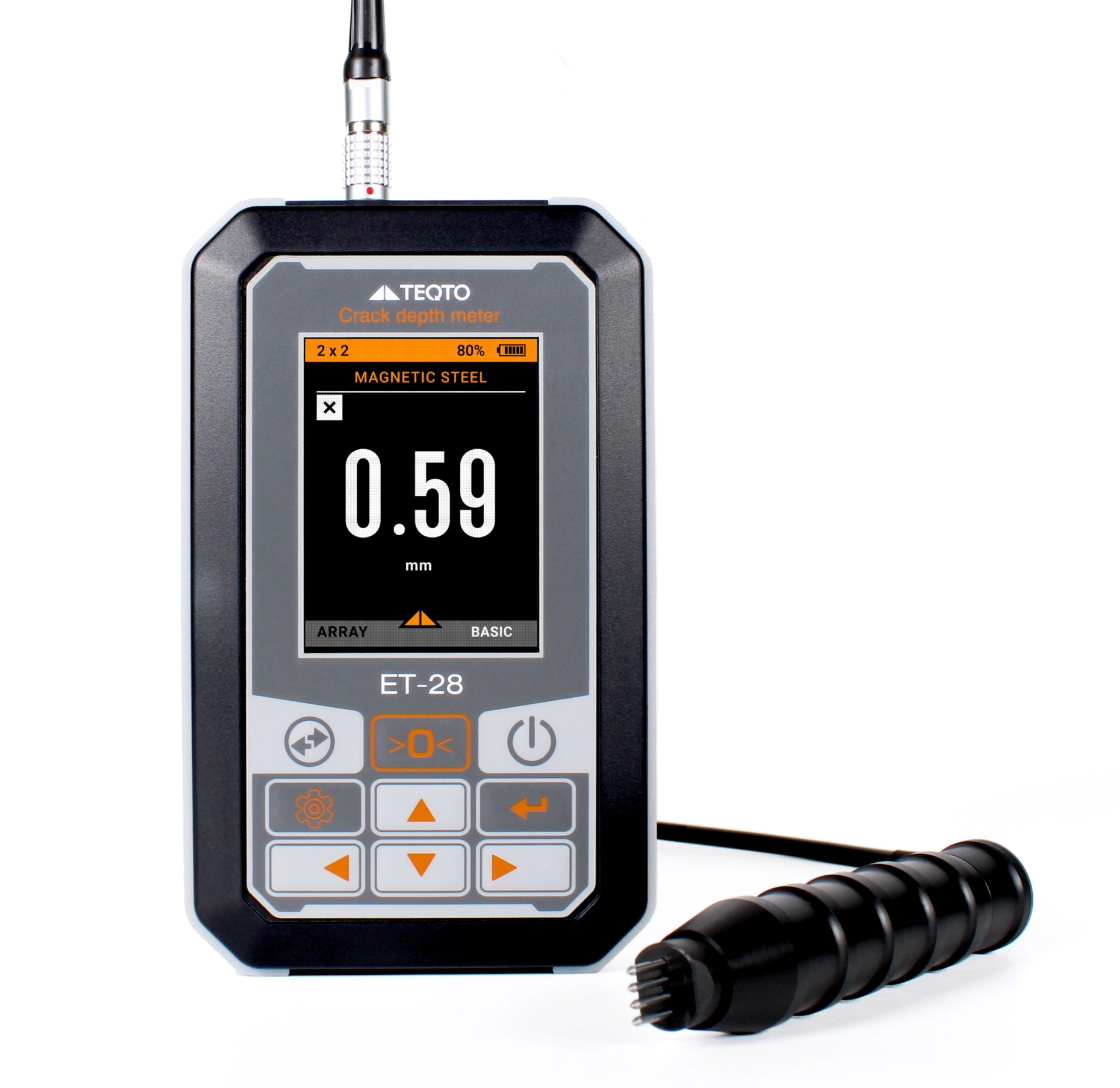
A high-precision, hand-held instrument explicitly designed for measuring the depth of cracks on various metals and alloys, including stainless steel and duralumin, which have been previously detected by other methods.
The crack depth meter operates on the principle of AC electro-potential measurement, providing prompt and precise depth testing compared to traditional methods. It works most efficiently in combination with other crack-revealing methods, such as magnetic particle, capillary, or eddy-current testing.
Application
- Shafts, rolls, rolling mills, construction components, machines, and mechanisms
- Pipes, tubes, oil-and-gas pipelines
- Pressure vessels
- Energy industry devices
Operational advantages
- Suitable for measurement on both ferromagnetic and non-ferromagnetic materials (e.g., stainless steel, aluminum alloys).
- Wide measuring range from 0.2 to 100.0 mm.
- Minimal influence of material electromagnetic properties on measurement results.
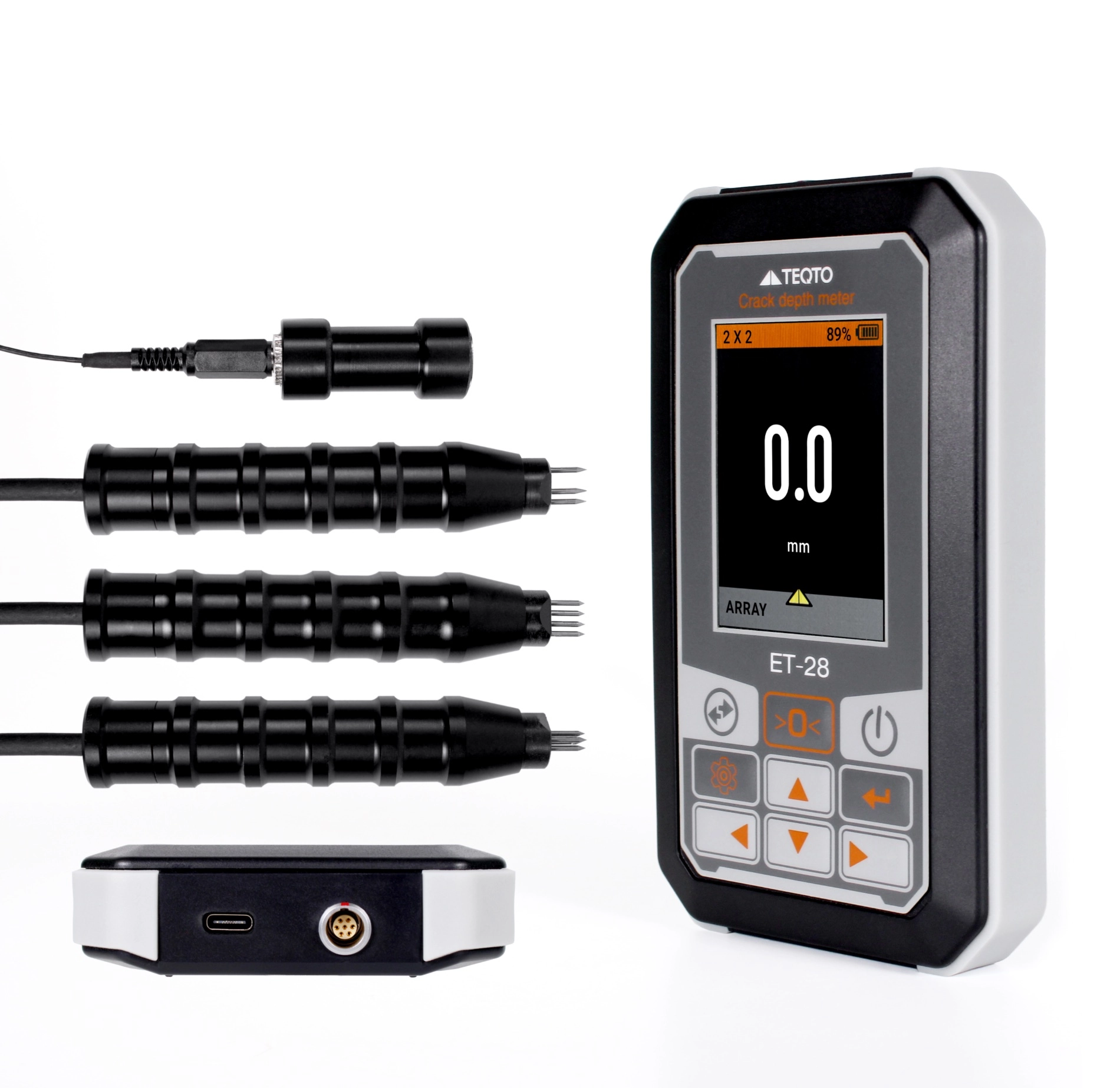
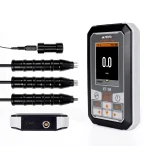
- Equipped with various probe designs for inspecting products of irregular shapes.
- Mobile spring-loaded contact electrodes on the probe enable measurements on curved surfaces.
- Suitable for use in field, workshop, and laboratory conditions.
Stages of crack depth measuring
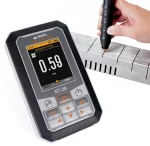
- Setting the “0” – measure on an undamaged area of the object.
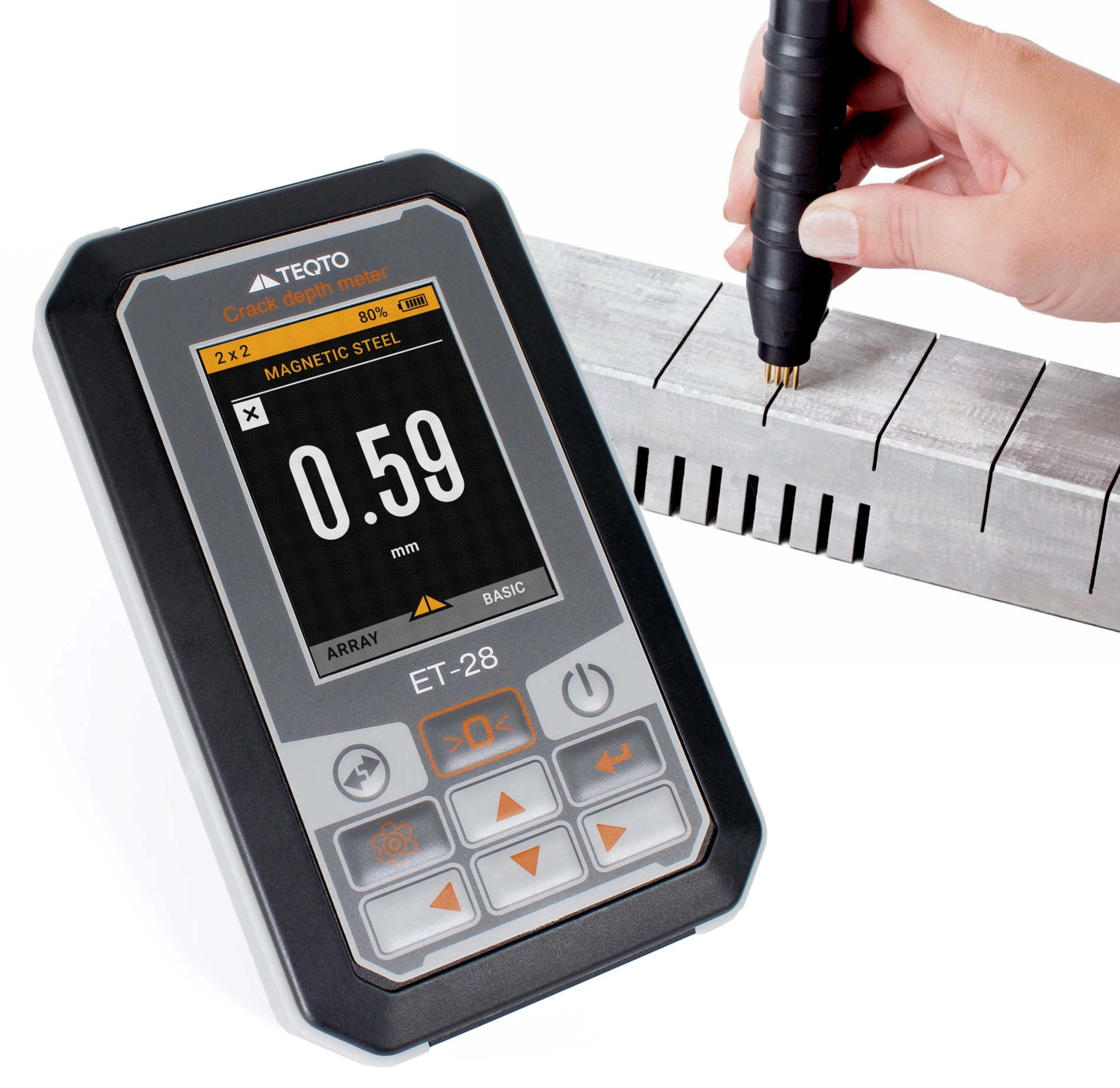
- Measuring crack depth – position the contact electrodes on opposite sides of the crack, and the depth measurement in mm will be displayed on the screen.
Requirements for control objects
- Surface roughness of 40 Rz (10 Ra) or less.
- Stable electrical contact with the probe electrodes.
Delivery set
- Electronic unit
- Accumulator
- Probe “1×4”
- Test block with 3 cracks
- Charger
- Soft case
- Arm cuff for securing the device
- Carrying and storage bag